In the dynamic world of content creation, photography, and videography, lighting is paramount. A ring light stands as a ubiquitous tool, revered for its ability to cast soft, even illumination that banishes harsh shadows and brings a professional sheen to any shot. Yet, the true power of a ring light lies not just in its glow, but in its controls—the “switches” that allow creators to sculpt light precisely to their needs. From subtle dimming to dramatic color shifts, understanding and utilizing these control mechanisms is essential for unlocking your ring light’s full potential and achieving flawless visual results. This comprehensive guide will illuminate the various types of ring light controls available, helping you navigate the options to select a system that perfectly complements your creative workflow and elevates your content.
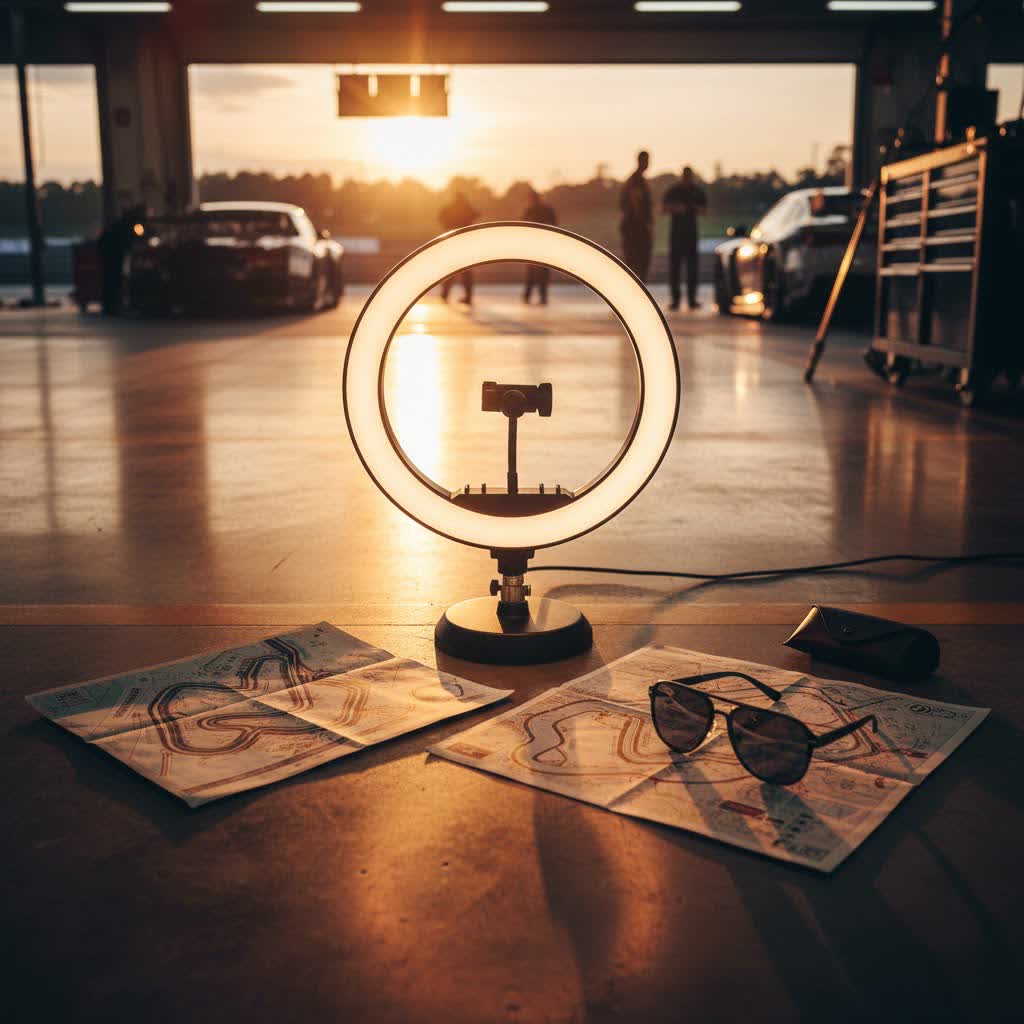
What is a Ring Light? Its Uses and Basic Controls
A ring light is a circular light source, typically composed of numerous small LED bulbs or a single fluorescent tube, designed to produce soft, even illumination. Its distinctive circular shape creates an attractive, signature “catchlight” in the eyes of a subject, making it incredibly popular across various applications.
Ring lights are indispensable tools in many fields. For photography and videography, they serve as excellent fill lights, minimizing shadows and providing flattering light for portraits, product shots, and close-ups. Makeup artists rely on them for color-accurate, shadow-free lighting, ensuring precision in their work. Live streamers and vloggers find ring lights essential for maintaining consistent, professional-quality lighting, enhancing their on-screen presence. At their most basic, all ring lights feature a simple on/off switch, often integrated directly into the power cable, allowing users to quickly activate or deactivate the light.
Common Types of Ring Light Controls
The evolution of ring light technology has brought forth a diverse array of control methods, each offering distinct advantages in terms of convenience, precision, and functionality. These “switches” go beyond simple on/off, providing granular command over your lighting environment.
In-Line Controls
|
Our Picks for the Best Ring Light in 2026
As an Amazon Associate I earn from qualifying purchases.
|
||
| Num | Product | Action |
|---|---|---|
| 1 | Sensyne 10'' Ring Light with 50'' Extendable Tripod Stand, LED Circle Lights with Phone Holder for Live Stream/Makeup/YouTube Video/TikTok, Compatible with All Phones |

|
| 2 | NEEWER Ring Light 18inch Kit: 55W 5600K Professional LED with Stand and Phone Holder, Soft Tube & Bag for Tattoo Lash Extension Barber Makeup Artist Studio Video Photography Lighting, RL-18 |
|
| 3 | Ring Spotlight Cam Pro, Plug-in (newest model), Home or business security, Retinal 4K with wide-angle video, 10x Enhanced Zoom, and 600 Lumen Spotlights, White |
|
| 4 | CloudValley Magnetic Desktop 10" Ring Light with Battery Display, 5000mAh Overhead Phone Mount, Foldable Portable LED Light with 3 Modes & 10-Level Brightness for Makeup, Selfies, TikTok, YouTube |
|
| 5 | Hagibis 21 inch Ring Light with Stand Outer 55W 5600k Dimmable LED Light, Tripod Stand,and Phone Holder,Remote Controller,Carrying Bag ,CRI 97+ 2540lux, for Streaming Home Office Zoom Call Lighting |
|
| 6 | Ring Outdoor Cam Pro, Plug-In (newest model), Home or business security, Retinal 4K with wide-angle video, 10x Enhanced Zoom, and Low-Light Sight, White |
|
| 7 | Weilisi 10" Ring Light with Stand 72'' Tall & Phone Holder,38 Color Modes Selfie Light with Tripod Stand,Stepless Dimmable/Speed LED Ring Light for iPhone & Android,YouTube, Makeup,TIK Tok |
|
| 8 | Video Conference Lighting for Zoom Meeting, Ring Light for Desk with Flexible Stand, 30 Light Modes Light for Video Recording, Desk Light & Memory Function for Zoom Calls, Video Streaming, Webcam |
|
| 9 | UBeesize 12'' Selfie Ring Light with 62’’ Tripod Stand for Video Recording, Live Streaming(YouTube, Instagram, TIK Tok), Compatible with Phones, Cameras and Webcams |
|
| 10 | Ring Floodlight Cam Pro, Wired (newest model), Home or business security, Retinal 4K with wide-angle video, 10x Enhanced Zoom, and 2000 Lumen Floodlights, White |
|
Many compact or USB-powered ring lights utilize in-line controllers positioned on the power cable. These are typically small, lightweight modules featuring push-buttons for basic functions. Users can usually turn the light on and off, adjust brightness levels through multiple steps, and sometimes cycle through a few preset color temperatures like warm, neutral, and cool white. This type of control is straightforward, cost-effective, and ideal for users who need fundamental adjustments without complex features.
On-Unit Dials and Buttons
More advanced ring lights often integrate controls directly onto the unit itself or its stand. These usually include physical dials or knobs for stepless adjustment of brightness (dimming) and color temperature. A dedicated dial for brightness allows for smooth transitions from 0% to 100% intensity, offering precise control over light output. Another dial can govern color temperature, enabling seamless shifts between warm (e.g., 3200K) and cool (e.g., 5600K) light to match ambient conditions or achieve a specific mood. Push-buttons might also be present for power, mode selection (e.g., RGB effects), or quick presets.
Wireless Remote Controls
For enhanced convenience, many modern ring lights come equipped with wireless handheld remote controls. These remotes typically connect via infrared (IR) or Bluetooth and allow users to adjust settings from a distance, without needing to reach the light itself. Common functions include power on/off, brightness increase/decrease, color temperature adjustments (often with dedicated buttons for warmer or cooler), and sometimes access to preset lighting modes. Some remotes might also include buttons for camera shutter control, making them exceptionally useful for solo content creators or photographers.
Smartphone App Control
The most sophisticated ring lights offer control through dedicated smartphone applications. These apps connect to the ring light via Bluetooth or Wi-Fi, transforming your mobile device into a comprehensive control panel. App control often provides the highest level of precision and customization, allowing users to:
- Fine-tune Brightness and Color Temperature: Adjust settings with sliders for minute precision.
- RGB Color Selection: For RGB ring lights, apps enable selection from a vast spectrum of colors, often via a color wheel or specific RGB values.
- Special Effects and Scene Modes: Many apps include pre-programmed lighting effects like strobes, flashes, or cinematic scene simulations.
- Custom Presets: Users can save their favorite lighting configurations for quick recall.
- Scheduling and Automation: Some apps allow for scheduling light changes or integrating with other smart devices.
Comparing Ring Light Control Methods
| Control Method | Ease of Use | Precision | Features | Typical Application | Cost (Relative) |
|---|---|---|---|---|---|
| In-Line Controls | Very High | Low | On/off, stepped brightness, basic CCT presets | Entry-level, portable, USB-powered ring lights | Low |
| On-Unit Dials/Buttons | High | Medium | On/off, stepless brightness, stepless CCT | Mid-range, studio, and desktop ring lights | Medium |
| Wireless Remote | Medium-High | Medium | On/off, brightness, CCT, some presets, shutter | Mid-to-high range, vlogging, YouTube, makeup | Medium-High |
| Smartphone App | Medium-High | High | All of the above, RGB, special effects, custom | High-end, professional content creation, smart studio | High |
How to Choose the Right Ring Light Control System
Selecting the ideal control system for your ring light depends heavily on your specific needs, budget, and desired level of creative flexibility. Considering these factors will guide you toward the perfect lighting companion.
Identify Your Usage Needs
Your primary use case should dictate the complexity of the controls you require.
- For basic illumination or casual selfies, a ring light with simple in-line controls or on-unit buttons for brightness and basic color temperature might suffice. These are straightforward and get the job done without overcomplicating your setup.
- Vloggers, live streamers, and makeup artists often benefit greatly from a wireless remote control. The ability to adjust lighting without breaking character or interrupting a makeup application is invaluable.
- Professional photographers, videographers, or advanced content creators who require precise color matching, dynamic lighting effects, or integration into a larger smart setup will find smartphone app control to be the most versatile and powerful option.
Consider Your Budget
Generally, the more advanced the control system, the higher the price point of the ring light.
- Entry-level ring lights with basic in-line or on-unit controls are typically the most affordable.
- Mid-range models often include on-unit dials and a wireless remote, striking a balance between functionality and cost.
- High-end ring lights with comprehensive app control and advanced features represent a greater investment, justified by their superior flexibility and precision.
Understand Key Technical Specifications
Beyond the control method, understanding the technical specifications related to dimming and color will help ensure your chosen light meets your quality demands.
- Brightness Control (Dimming Range): Look for ring lights that offer a wide dimming range, ideally from 0% to 100%, and “stepless” adjustment for smooth transitions. This allows for optimal light intensity in any environment.
- Color Temperature Control (CCT): If you need to match different ambient light sources or create various moods, a bi-color ring light with adjustable color temperature (e.g., 3000K to 6500K) is crucial. Some advanced models also offer full RGB control for creative color effects.
- Color Rendering Index (CRI): While not a “switch” feature, a high CRI (95+) is vital for accurate color representation, particularly important for makeup artists and product photographers.
Consult Reviews and Product Comparisons
Before making a final decision, dedicate time to reading reviews from other users and comparing products side-by-side. Pay close attention to feedback regarding the responsiveness and intuitiveness of the controls. User experiences can highlight potential frustrations with a remote’s range, an app’s stability, or the feel of physical dials.
Where to Buy Ring Lights with Optimal Controls
Ring lights are widely available through various retail channels, both online and in physical stores. For the broadest selection and competitive pricing, online marketplaces such as Amazon, B&H Photo, Adorama, and specialised electronics e-commerce sites are excellent choices. These platforms often feature detailed product descriptions, user reviews, and comparison tools to aid your decision.
Physical electronics stores or photography equipment shops can be beneficial for those who prefer to see and test the ring light and its controls in person before purchasing. This allows you to get a tactile feel for the dials, buttons, and overall build quality.
When purchasing, particularly online, always verify the seller’s return policy and warranty information. This ensures peace of mind should the product not meet your expectations or develop an issue. Look for reputable brands known for their customer support.
Tips for Using and Maintaining Your Ring Light Controls
Proper usage and maintenance of your ring light’s control mechanisms can significantly extend its lifespan and ensure consistent performance.
- Handle Cords and In-Line Switches Carefully: Avoid tugging on power cords, especially where in-line switches are located, as this can damage internal wiring.
- Protect Dials and Buttons: Keep on-unit controls free from dust, liquids, and makeup residue, which can impede their function or cause stickiness. Use a soft, dry cloth for cleaning.
- Remote Control Care:
- Battery Replacement: Keep spare batteries (often coin cells like CR2032) on hand and replace them promptly when the remote becomes unresponsive.
- Line of Sight: For IR remotes, ensure a clear line of sight between the remote and the ring light’s sensor.
- Storage: Store remotes in a safe place to prevent loss or accidental damage.
- App Control Best Practices:
- Bluetooth/Wi-Fi Connection: Ensure your phone’s Bluetooth or Wi-Fi is enabled and correctly paired with the ring light.
- App Updates: Regularly update the manufacturer’s app to benefit from bug fixes and new features.
- Firmware Updates: Some ring lights may have firmware updates that enhance control functionality; check the app or manufacturer’s website.
- Power Down Properly: Always turn off your ring light using its designated power switch or control, rather than simply unplugging it, to prevent potential electrical stress.
Troubleshooting Common Ring Light Control Issues
Encountering issues with your ring light’s controls can be frustrating, but many common problems have simple solutions.
- Remote Not Working:
- Check Batteries: This is the most frequent culprit. Replace the remote control’s batteries.
- Line of Sight: Ensure no obstructions are between the remote and the light’s receiver.
- Pairing: If it’s a Bluetooth remote, re-attempt the pairing process as per the user manual.
- App Connectivity Problems:
- Bluetooth/Wi-Fi: Verify that Bluetooth or Wi-Fi is enabled on your smartphone and that the ring light is within range.
- Re-pair: Disconnect and re-pair the device within the app.
- Restart: Close and restart the app, or even restart your phone and the ring light.
- App/Firmware Updates: Ensure both the app and the ring light’s firmware (if applicable) are up to date.
- Dimming or Color Temperature Issues:
- Power Supply: Ensure the ring light is receiving adequate power. A weak or faulty power adapter can affect light output and stability.
- Faulty Unit: If specific segments or colors are not working, or controls are entirely unresponsive, there might be an internal fault with the light itself. Contact customer support.
- Unresponsive On-Unit Controls:
- Cleanliness: Gently clean any dust or debris from around the dials and buttons.
- Power Cycle: Turn the ring light off, unplug it, wait a minute, and then plug it back in and turn it on.
Conclusion
The “switches” on a ring light are far more than simple on/off buttons; they are the gateway to precise light manipulation, empowering creators to achieve their artistic vision. Whether you opt for the simplicity of in-line controls, the tactile feedback of on-unit dials, the freedom of a wireless remote, or the extensive customization of a smartphone app, understanding these control mechanisms is key to harnessing your ring light’s full potential.
By carefully considering your specific needs, budget, and desired level of control, you can select a ring light that not only illuminates your subject beautifully but also seamlessly integrates into your creative workflow. What kind of control system will best elevate your content?
Frequently Asked Questions
Can I replace my ring light’s built-in switch if it breaks?
Replacing a ring light’s built-in switch can be challenging as these components are often integrated into the unit’s internal circuitry. For simple in-line switches on the power cord, a replacement might be possible with basic electrical skills, but for on-unit dials or app-controlled systems, it’s generally recommended to consult the manufacturer’s support or consider professional repair.
Do all LED ring lights have dimmer switches?
Most modern LED ring lights are designed with dimming capabilities, allowing for adjustable brightness. However, some very basic or older models, particularly those using fluorescent tubes rather than LEDs, might only offer an on/off function without dimming. Always check product specifications to confirm.
What’s the best type of control for live streaming or quick adjustments?
For live streaming or scenarios requiring rapid adjustments, wireless remote controls or smartphone app controls are typically the most efficient. They allow you to modify brightness, color temperature, or special effects instantly without physically touching the light, ensuring a smooth and professional on-air experience.
