In today’s visual world, where every frame tells a story, lighting is paramount. Whether you’re a seasoned photographer, a budding vlogger, a makeup artist, or a live streamer, achieving professional-quality illumination can transform your content. Enter the ring light, a versatile and indispensable tool that has revolutionized how creators illuminate their subjects. This guide will walk you through everything you need to know about ring lights, helping you choose and utilize the perfect one to enhance your visual presence.
What is a Ring Light and Its Purpose?
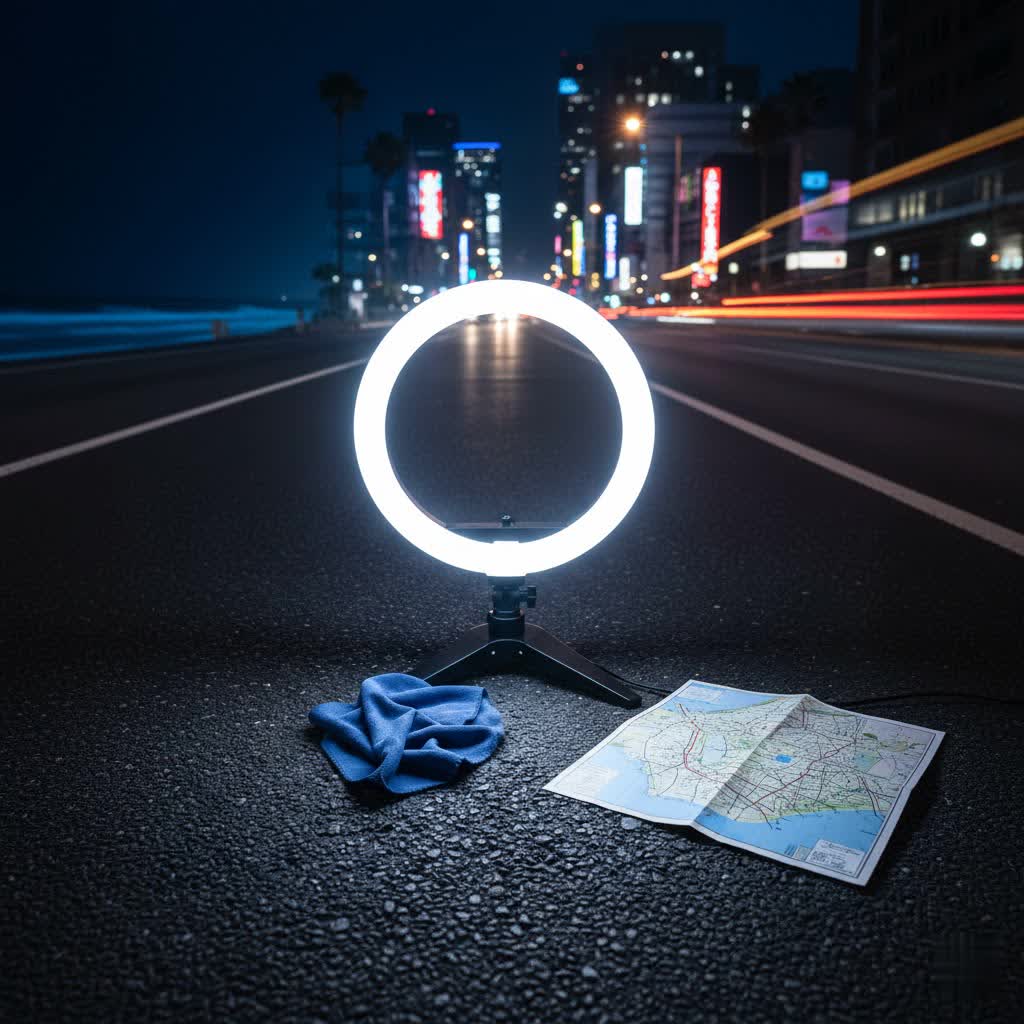
A ring light is a simple yet effective lighting device, typically featuring a circular array of small bulbs, most commonly LEDs, or a single circular fluorescent tube. Its unique design allows a camera lens (or smartphone) to be positioned directly in its center, ensuring that light is cast evenly from all angles onto the subject. This symmetrical illumination is key to its widespread popularity.
The primary purpose of a ring light is to provide soft, diffused, and uniform lighting that helps to eliminate harsh shadows and flatter skin tones. Beyond merely brightening a scene, a hallmark of ring light usage is the distinctive “catch light”—a perfect circular reflection that appears in the subject’s eyes, adding depth, vibrancy, and a captivating sparkle. From close-up beauty shots and detailed portrait photography to engaging video tutorials, dynamic live streams, and even professional video calls, ring lights are designed to make you and your work shine.
Types of Ring Lights Available
The world of ring lights is diverse, offering options tailored to virtually every need and budget. Understanding the different types available will help you make an informed choice.
By Size
Ring lights are commonly measured by their outer diameter, typically ranging from 6 to 20 inches.
- Compact Ring Lights (6-10 inches): Highly portable and often battery-powered or USB-powered, these smaller lights are ideal for smartphones and close-up work like selfies, mobile vlogging, and quick makeup tutorials on the go.
- Medium Ring Lights (12-18 inches): Offering a balance of portability and power, these are versatile for DSLR cameras and provide better coverage and intensity. They suit studio settings and on-location shoots, perfect for headshots, upper-body shots, and general content creation.
- Large Ring Lights (18-20+ inches): Best suited for professional studio setups and DSLR cameras, these lights offer a wide coverage area and intense brightness, making them ideal for full-body shots, working with multiple subjects, and detailed photography where softer, more encompassing light is desired.
|
Our Picks for the Best Ring Light in 2026
As an Amazon Associate I earn from qualifying purchases.
|
||
| Num | Product | Action |
|---|---|---|
| 1 | Ring Floodlight Cam Pro, Wired (newest model), Home or business security, Retinal 4K with wide-angle video, 10x Enhanced Zoom, and 2000 Lumen Floodlights, White |

|
| 2 | Hagibis 21 inch Ring Light with Stand Outer 55W 5600k Dimmable LED Light, Tripod Stand,and Phone Holder,Remote Controller,Carrying Bag ,CRI 97+ 2540lux, for Streaming Home Office Zoom Call Lighting |
|
| 3 | Weilisi 10" Ring Light with Stand 72'' Tall & Phone Holder,38 Color Modes Selfie Light with Tripod Stand,Stepless Dimmable/Speed LED Ring Light for iPhone & Android,YouTube, Makeup,TIK Tok |
|
| 4 | NEEWER Ring Light 18inch Kit: 55W 5600K Professional LED with Stand and Phone Holder, Soft Tube & Bag for Tattoo Lash Extension Barber Makeup Artist Studio Video Photography Lighting, RL-18 |
|
| 5 | UBeesize 12'' Selfie Ring Light with 62’’ Tripod Stand for Video Recording, Live Streaming(YouTube, Instagram, TIK Tok), Compatible with Phones, Cameras and Webcams |
|
| 6 | Ring Spotlight Cam Pro, Plug-in (newest model), Home or business security, Retinal 4K with wide-angle video, 10x Enhanced Zoom, and 600 Lumen Spotlights, White |
|
| 7 | Ring Outdoor Cam Pro, Plug-In (newest model), Home or business security, Retinal 4K with wide-angle video, 10x Enhanced Zoom, and Low-Light Sight, White |
|
| 8 | Sensyne 10'' Ring Light with 50'' Extendable Tripod Stand, LED Circle Lights with Phone Holder for Live Stream/Makeup/YouTube Video/TikTok, Compatible with All Phones |
|
| 9 | CloudValley Magnetic Desktop 10" Ring Light with Battery Display, 5000mAh Overhead Phone Mount, Foldable Portable LED Light with 3 Modes & 10-Level Brightness for Makeup, Selfies, TikTok, YouTube |
|
| 10 | Video Conference Lighting for Zoom Meeting, Ring Light for Desk with Flexible Stand, 30 Light Modes Light for Video Recording, Desk Light & Memory Function for Zoom Calls, Video Streaming, Webcam |
|
By Power Source
- AC Powered (Wired): These lights plug directly into a wall outlet, offering continuous power without battery concerns. They are excellent for stationary setups like studios or permanent streaming desks.
- Battery Powered: Providing ultimate portability, battery-powered ring lights are perfect for outdoor shoots or locations without readily available power outlets. Battery life varies, with some models offering up to 1.5 hours at full power.
- USB Powered: Many smaller and mid-sized ring lights can be powered via a USB port, allowing them to connect to laptops, power banks, or USB wall chargers, adding to their flexibility.
By Light Technology
The type of light source impacts performance, features, and cost.
- LED Ring Lights: The most common type, LED (Light Emitting Diode) ring lights are energy-efficient, produce minimal heat, and often offer adjustable brightness and color temperature settings. They are known for their consistency and longevity.
- Fluorescent Ring Lights: These lights use fluorescent bulbs or tubes, known for providing a soft, diffused light, often with a cooler color temperature. They were once a professional standard but are now often superseded by LEDs.
- Bi-Color Ring Lights: Equipped with both warm and cool LEDs, bi-color ring lights allow you to adjust the color temperature, typically ranging from a warm 3200K to a cool 5600K. This flexibility helps match ambient light or create specific moods.
- RGB Ring Lights: Featuring Red, Green, and Blue LEDs, RGB ring lights offer a vast spectrum of colors beyond traditional warm and cool tones. They enable dynamic and vibrant lighting effects, often controlled via a smartphone app or dedicated controller.
By Function
- Continuous Lights: Most ring lights provide continuous illumination, meaning the light stays on consistently. This is ideal for video recording, live streaming, and makeup application, as it allows you to see the exact lighting effect in real-time.
- Strobe/Flash Lights: Less common for general content creation, strobe ring lights produce a brief, powerful flash of light synchronized with your camera’s shutter. These are primarily used in still photography, particularly macro and scientific applications, for freezing motion and achieving sharper images. They are typically brighter than continuous lights but flash intermittently.
How to Choose the Right Ring Light for Your Needs
Selecting the perfect ring light involves carefully considering your specific requirements and understanding the key features that contribute to its performance.
Determine Your Usage Needs
Before diving into specifications, identify your primary use cases:
- Purpose: Are you primarily taking selfies, recording vlogs, applying makeup, conducting professional interviews, or shooting detailed product photography? Different purposes may necessitate varied sizes and features.
- Portability: Do you need a light for a fixed studio setup, or do you require something lightweight and battery-powered for on-the-go content creation? Portable models often sacrifice some power for convenience.
- Camera Compatibility: Will you be using a smartphone, a DSLR camera, or a webcam? Most ring lights come with integrated mounts for phones, but ensure your camera setup fits comfortably within the ring.
Key Technical Specifications to Consider
Once you understand your needs, evaluate these technical aspects:
- Size: As discussed, larger diameters generally provide a softer, more even light distribution, which is flattering for portraits and wider shots. Smaller rings are great for portability and extreme close-ups.
- Brightness (Lumens/Wattage) & Dimming: Look for lights with adjustable brightness (often 0-100% dimmer) to fine-tune the intensity for various lighting conditions and distances from your subject. Higher wattage usually translates to greater maximum brightness.
- Color Temperature (Kelvin): If consistency with ambient light or creative flexibility is important, choose a bi-color ring light with adjustable Kelvin settings (e.g., 3200K-5600K). This allows you to switch between warm (yellowish), cool (bluish), and neutral white light.
- Color Rendering Index (CRI): A high CRI (90+) indicates that the light accurately renders colors, which is crucial for makeup artists and product photographers who need true-to-life color representation.
- Power Options: Decide if you need the consistent power of an AC outlet or the flexibility of battery or USB power for mobile setups.
Essential Accessories and Features
Many ring lights come as kits, often including valuable accessories:
- Stands/Tripods: A sturdy, adjustable light stand or tripod is crucial for positioning your ring light at the ideal height and angle.
- Phone Holders & Camera Mounts: Integrated mounts allow you to securely attach your smartphone or camera directly in the center of the ring light. Some offer multiple cold shoe mounts for additional accessories.
- Remote Controls & App Integration: These features provide convenient control over brightness, color temperature, and even special effects without needing to physically reach the light.
- Diffusers & Filters: While ring lights naturally produce soft light, additional diffusers can further soften output. Color filters (gels) can be used to achieve specific color effects if your light isn’t RGB capable.
- Mirrors: Some models include a mirror attachment, which is especially useful for makeup application.
Top Ring Light Brands and Models
The market offers a wide array of reputable brands, each with unique strengths. Here’s a glimpse at some popular choices often praised by content creators:
- Elgato Ring Light: Known for its quality OSRAM LEDs, flicker-free output, app control, and high brightness (up to 2500 lumens), often favored by streamers.
- Razer Ring Light: A strong contender for both PC and mobile users, featuring 192 LEDs, wide brightness adjustment (10-100%), and flexible mounting options.
- Rotolight NEO 2: A portable yet powerful option, offering advanced features like High Speed Sync (HSS) flash, adjustable color temperature, and unique CineSFX™ lighting effects, popular with vloggers.
- Neewer Pro 18″ LED Ring Light: Offers excellent value, featuring numerous LEDs, wide adjustability, and a convenient folding stand, making it a favorite for many.
- Lume Cube Cordless 12” Ring Light Mini: Emphasizes portability and cordless operation with a built-in battery, perfect for creators on the move.
Maximizing Your Ring Light’s Potential: Usage and Maintenance Tips
Getting the most out of your ring light involves proper setup and care.
- Optimal Positioning: For the classic “halo” effect and even lighting, position your camera lens directly through the center of the ring light. Place the light relatively close to your subject to minimize shadows and create a flattering glow. Experiment with distance to find the perfect balance.
- Adjusting Settings: Utilize the adjustable brightness and color temperature controls to match your environment or achieve a desired mood. Warmer tones often create a cozy, intimate feel, while cooler tones can project a modern, professional look.
- Control Ambient Light: Turn off competing light sources in your room. Relying solely on your ring light can help your camera focus better on your face and prevent unwanted color casts or shadows from other lights.
- Power Management: If using a battery-powered unit, monitor battery life. For wired lights, ensure a stable power source to prevent flickering, which can be distracting in video.
- Basic Maintenance: Keep your ring light clean by gently wiping the LED surface with a soft, dry cloth. Store it in its case (if provided) or a safe place to protect it from dust and accidental damage, extending its lifespan.
Ring Lights vs. Other Lighting Solutions
While ring lights are excellent, they are one tool among many.
- LED Panels: Often rectangular, LED panels provide a broader, more expansive light source. They are highly versatile and good for general videography, product showcases, or illuminating a larger area.
- Softboxes & Umbrella Lights: These modifiers are typically used with studio strobes or continuous lights to create very large, soft, diffused light sources. They offer broader coverage than ring lights, ideal for wide shots or groups, but can be more cumbersome and create larger, softer shadows.
- Reflectors & Diffusers: These passive tools are used to bounce existing light or soften harsh light. They are often used in conjunction with ring lights to refine lighting, rather than as primary light sources.
The key distinction is that a ring light’s unique circular design and central camera placement are specifically engineered for flattering facial illumination, producing those signature catch lights and shadow-minimizing effects.
Conclusion
The journey to perfectly lit content begins with understanding and choosing the right tools. A ring light is more than just a light source; it’s a creative partner that can elevate your photography, video, makeup artistry, and live streams to a professional standard. By considering your specific needs, evaluating technical features, and mastering a few simple usage tips, you can unlock the full potential of this incredible device. Embrace the power of the ring light, and let your brilliance shine through every piece of content you create.
Frequently Asked Questions
What size ring light is best for phones?
For smartphones, compact (6-10 inches) and medium (12-14 inches) ring lights are generally ideal. Smaller clip-on models are great for portability and selfies, while slightly larger ones offer better coverage for vlogging or makeup tutorials shot on your phone.
Can a ring light improve my webcam quality?
Absolutely. A ring light significantly improves webcam quality by providing even, direct illumination that reduces shadows, brightens your face, and helps your webcam produce a clearer, more professional image, even in low-light conditions.
What is color temperature and why does it matter?
Color temperature, measured in Kelvin (K), describes the warmth or coolness of white light. It matters because it allows you to match your lighting to existing ambient light (e.g., warmer indoor lights or cooler daylight) or to set a specific mood for your content.
Is a ring light worth it for beginners?
Yes, a ring light is highly recommended for beginners due to its ease of use, affordability, and immediate positive impact on content quality. It’s a straightforward way to achieve professional-looking lighting without extensive knowledge of complex lighting setups.
