In the dynamic realm of visual content creation, from stunning photography and engaging videography to flawless makeup tutorials and captivating live streams, the pursuit of perfect lighting is paramount. A ring light stands out as an indispensable tool, renowned for its ability to cast an even, flattering glow that minimizes shadows and creates iconic “catchlights” in the eyes. When we talk about “Ring Light Bulbs,” we’re often referring to the sophisticated light sources integrated into these devices – predominantly high-efficiency LED arrays or, in some designs, specialized circular fluorescent tubes – rather than traditional screw-in bulbs. This comprehensive guide will illuminate the various types of light sources used in ring lights, detail how to select the best option for your needs, and provide essential tips for their usage and maintenance.
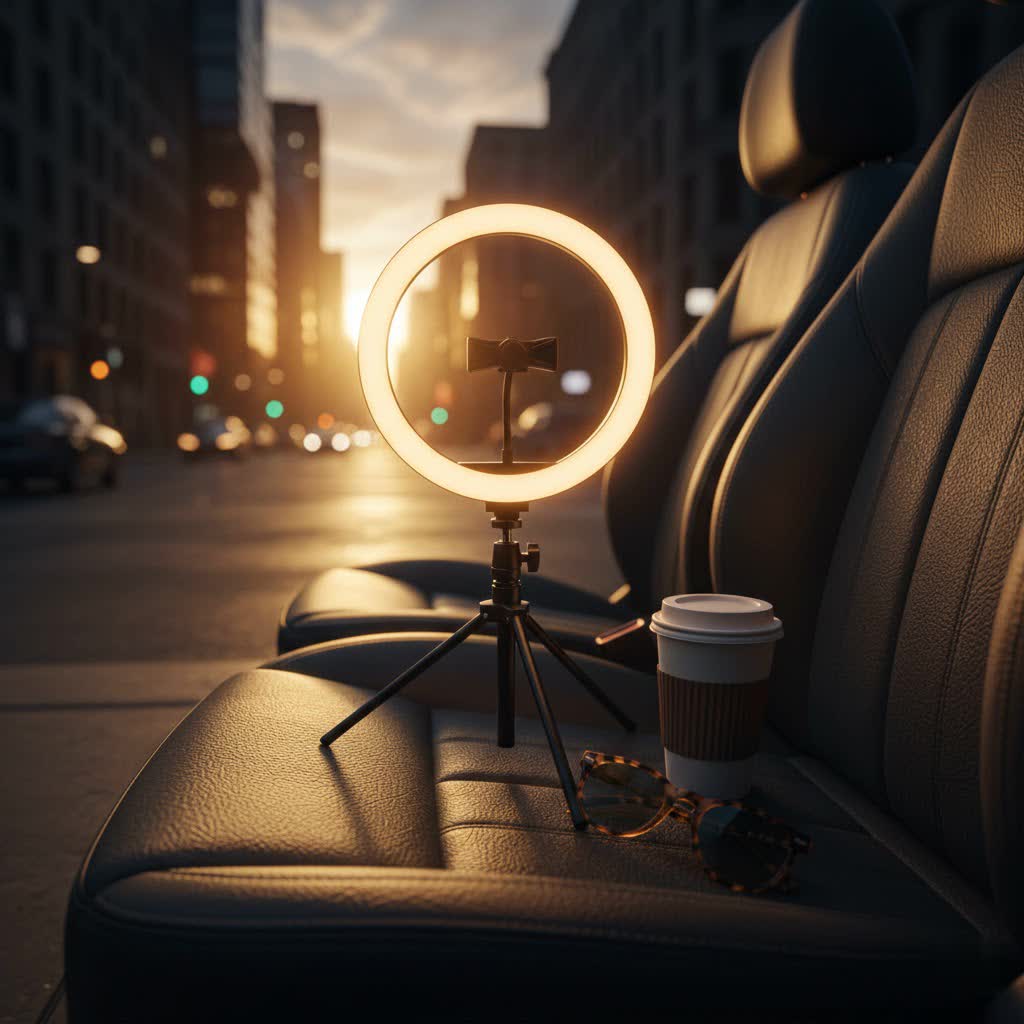
What Are Ring Light Bulbs? Unpacking Their Purpose
At its core, a ring light bulb, or more accurately, the lighting element within a ring light, is designed to emit a soft, diffused, and uniform light from a circular source. This unique configuration allows a camera or smartphone to be positioned directly in the center, ensuring the subject is bathed in light from all angles. The primary purpose is to eliminate harsh shadows, reduce skin imperfections, and produce a distinctive circular reflection in the eyes, adding a professional sparkle that enhances visual appeal.
These specialized light sources are crucial across various applications. In photography, they are favored for portraits, macro shots, and product photography to achieve crisp details and balanced illumination. For videographers and content creators, ring lights provide consistent, flicker-free lighting essential for high-quality vlogs, interviews, and online tutorials. Makeup artists rely on them to ensure true color representation and shadow-free application, while live streamers benefit from their ability to maintain a bright, engaging presence on screen.
Types of Ring Light Bulbs on the Market
The technology powering ring lights has evolved, primarily focusing on two main types of light sources: LED and fluorescent. Understanding their differences is key to choosing the right tool for your creative endeavors.
LED Ring Lights
|
Our Picks for the Best Ring Light in 2026
As an Amazon Associate I earn from qualifying purchases.
|
||
| Num | Product | Action |
|---|---|---|
| 1 | Ring Outdoor Cam Pro, Plug-In (newest model), Home or business security, Retinal 4K with wide-angle video, 10x Enhanced Zoom, and Low-Light Sight, White |

|
| 2 | NEEWER Ring Light 18inch Kit: 55W 5600K Professional LED with Stand and Phone Holder, Soft Tube & Bag for Tattoo Lash Extension Barber Makeup Artist Studio Video Photography Lighting, RL-18 |
|
| 3 | Ring Spotlight Cam Pro, Plug-in (newest model), Home or business security, Retinal 4K with wide-angle video, 10x Enhanced Zoom, and 600 Lumen Spotlights, White |
|
| 4 | Hagibis 21 inch Ring Light with Stand Outer 55W 5600k Dimmable LED Light, Tripod Stand,and Phone Holder,Remote Controller,Carrying Bag ,CRI 97+ 2540lux, for Streaming Home Office Zoom Call Lighting |
|
| 5 | Ring Floodlight Cam Pro, Wired (newest model), Home or business security, Retinal 4K with wide-angle video, 10x Enhanced Zoom, and 2000 Lumen Floodlights, White |
|
| 6 | UBeesize 12'' Selfie Ring Light with 62’’ Tripod Stand for Video Recording, Live Streaming(YouTube, Instagram, TIK Tok), Compatible with Phones, Cameras and Webcams |
|
| 7 | Weilisi 10" Ring Light with Stand 72'' Tall & Phone Holder,38 Color Modes Selfie Light with Tripod Stand,Stepless Dimmable/Speed LED Ring Light for iPhone & Android,YouTube, Makeup,TIK Tok |
|
| 8 | Sensyne 10'' Ring Light with 50'' Extendable Tripod Stand, LED Circle Lights with Phone Holder for Live Stream/Makeup/YouTube Video/TikTok, Compatible with All Phones |
|
| 9 | CloudValley Magnetic Desktop 10" Ring Light with Battery Display, 5000mAh Overhead Phone Mount, Foldable Portable LED Light with 3 Modes & 10-Level Brightness for Makeup, Selfies, TikTok, YouTube |
|
| 10 | Video Conference Lighting for Zoom Meeting, Ring Light for Desk with Flexible Stand, 30 Light Modes Light for Video Recording, Desk Light & Memory Function for Zoom Calls, Video Streaming, Webcam |
|
Light Emitting Diodes (LEDs) are the dominant technology in modern ring lights due to their numerous advantages. These lights typically feature an array of small LED chips arranged in a circular pattern, often integrated directly into the ring structure. LED ring lights are celebrated for their exceptional energy efficiency, consuming significantly less power than older alternatives while delivering ample brightness. They boast an impressive lifespan, often lasting tens of thousands of hours, which translates to years of reliable use before needing replacement. Many LED ring lights offer adjustable brightness (dimmability) and variable color temperature, allowing users to switch between warm, neutral, and cool white light to match ambient conditions or achieve specific artistic effects.
Fluorescent Ring Lights
Prior to the widespread adoption of LEDs, many ring lights utilized circular fluorescent tubes. These “bulbs” provide a continuous, soft light that was, and still is, effective for general lighting purposes. However, they come with certain drawbacks. Fluorescent bulbs are generally less energy-efficient than LEDs and have a shorter lifespan, meaning they require more frequent replacement. They also tend to generate more heat, which can be a consideration in prolonged use or small spaces. While they offer consistent brightness, their color temperature is usually fixed, limiting adaptability compared to modern LED counterparts.
Continuous vs. Flash Ring Lights
Beyond the bulb type, ring lights can also be categorized by their light emission:
- Continuous Ring Lights: These provide a constant stream of light, making them ideal for video recording, live streaming, and general photography where “what you see is what you get” lighting is preferred. Most modern LED ring lights are continuous.
- Flash Ring Lights: Less common for general consumer use, these ring lights are designed to emit a short, powerful burst of light synchronized with a camera’s shutter. They are significantly brighter than continuous lights and are primarily used in still photography to freeze motion and achieve maximum illumination.
Comparing Ring Light Bulb Technologies: LED vs. Fluorescent
The choice between LED and fluorescent technologies for your ring light largely depends on your priorities regarding performance, longevity, and versatility.
Detailed Comparison Table
| Feature | LED Ring Lights | Fluorescent Ring Lights |
|---|---|---|
| Energy Efficiency | High (lower power consumption) | Lower (higher power consumption) |
| Lifespan | Very Long (tens of thousands of hours) | Shorter (thousands of hours) |
| Heat Output | Low | Moderate to High |
| Color Temperature | Often Adjustable (bi-color, from warm to cool) | Usually Fixed (e.g., daylight white) |
| Brightness Control | Stepless Dimming (common) | Step Dimming or Limited Dimming |
| Durability | Robust (less prone to breakage) | Fragile (glass tubes, susceptible to breakage) |
| Initial Cost | Generally Higher | Generally Lower |
| Operating Cost | Lower (due to efficiency and longevity) | Higher (due to replacements and energy use) |
| Environmental Impact | More eco-friendly (no mercury, less waste) | Contains mercury, requires special disposal |
> “While fluorescent ring lights offered a good entry point for creators years ago, modern LED technology provides unparalleled flexibility and efficiency, making it the go-to for serious content creation today.” – Alex Rivera, Senior Lighting Technician
Top Considerations When Choosing Ring Light Bulbs
Selecting the ideal ring light involves more than just picking a type; it requires a thoughtful assessment of your specific needs and an understanding of key technical specifications.
Identifying Your Specific Needs
Before making a purchase, ask yourself:
- What is your primary use case? Are you primarily taking portraits, shooting product photos, recording YouTube videos, or doing live makeup tutorials? Each application might benefit from different features.
- What size ring light do you need? Smaller, portable ring lights (e.g., 6-10 inches) are great for close-up shots and mobile use, while larger rings (18-22 inches) provide broader coverage for studio work or full-face illumination.
- What essential features do you require? Dimmability is almost always beneficial. Adjustable color temperature (bi-color) offers immense versatility. Consider if you need a remote control, a phone holder, or battery power for portability.
Understanding Key Specifications
Technical specifications provide concrete data on a ring light’s performance:
- Wattage/Lumen Output: While wattage indicates power consumption, lumens directly measure the total amount of visible light emitted. Higher lumens mean a brighter light. For most users, 40-60W LED ring lights are sufficient, but more powerful options exist for larger spaces or demanding applications.
- Color Temperature (Kelvin – K): Measured in Kelvin, this indicates the “warmth” or “coolness” of the light.
- Warm White (2700K-3000K): Similar to incandescent bulbs, ideal for cozy environments.
- Neutral/Cool White (3500K-4100K): A balanced white light, excellent for general use and professional makeup.
- Daylight (5000K-6500K): Mimics natural daylight, crucial for color accuracy in photography and videography.
- Many high-quality LED ring lights offer adjustable color temperatures, allowing you to fine-tune the ambiance.
- Color Rendering Index (CRI): CRI measures how accurately a light source reveals the true colors of objects compared to natural daylight. A higher CRI (typically 90 or above) is essential for applications like makeup artistry and product photography, where accurate color reproduction is critical. A light with a low CRI can make colors appear dull or unnatural.
The Importance of Reviews and Product Comparisons
In today’s market, user reviews and expert comparisons are invaluable. They offer real-world insights into a product’s performance, durability, and user-friendliness. Look for feedback on consistency of light, ease of assembly, heat output, and the accuracy of advertised features like color temperature. This research can help you avoid common pitfalls and ensure your investment aligns with your expectations.
Where to Buy Ring Light Bulbs (and Full Ring Lights)
For most modern LED ring lights, you are typically purchasing a complete unit where the “bulbs” (LEDs) are integrated and not sold separately for replacement. However, for older fluorescent models, replacement circular tubes can often be found.
Reputable online retailers such as Amazon, B&H Photo Video, and Adorama are excellent starting points, offering a wide selection and detailed product information. Specialty camera and lighting stores, both online and brick-and-mortar, can provide expert advice and a curated range of high-quality options. Always verify the seller’s return policy and warranty information before purchasing. It’s also important to distinguish between photography ring lights and smart home bulbs from brands like “Ring,” which are designed for home security and general illumination, not professional content creation.
Maximizing Lifespan: Usage and Maintenance Tips
To ensure your ring light and its light sources continue to perform optimally for years, proper usage and maintenance are key.
- Proper Assembly and Installation: Always follow the manufacturer’s instructions for setting up your ring light. Securely attach all components, especially the stand and the light head, to prevent accidental damage.
- Cleaning: Regularly clean the light elements and the fixture.
- Unplug First: Always disconnect the power before cleaning to prevent electrical hazards.
- Clean the Light Elements: For LEDs or fluorescent tubes, use a soft, dry microfiber cloth to gently wipe away dust and fingerprints. Avoid abrasive cleaners, which can scratch surfaces or leave residues that affect light quality.
- Clean the Housing: Use a soft cloth dampened with a mild soap and water solution for the exterior. Ensure no liquid enters switches or electrical components, especially if the unit is not explicitly waterproof.
- Storage: When not in use, store your ring light in a cool, dry place, away from direct sunlight, extreme temperatures, and excessive humidity. Many come with carry bags for protection.
- Replacing Bulbs (Fluorescent): If you have a fluorescent ring light that uses replaceable tubes, ensure you purchase the correct wattage, size, and pin configuration. Always handle fluorescent tubes carefully to avoid breakage and ensure safe disposal due to mercury content.
Common Issues with Ring Light Bulbs and How to Troubleshoot Them
Even with proper care, issues can arise. Knowing how to troubleshoot common problems can save you time and frustration.
- Flickering Lights: This is often a sign of a loose connection. Check all cables and power sources. For LED lights, an incompatible dimmer or a faulty LED driver can also cause flickering. If a fluorescent tube flickers, it might be nearing the end of its life or have a loose connection in its socket.
- Inconsistent Dimming or Color Shift: If your light isn’t dimming smoothly or its color temperature isn’t consistent, the internal control electronics might be malfunctioning, or the power supply could be insufficient. For bi-color LED lights, a problem with the warm or cool LED arrays could cause a color imbalance. Older fluorescent bulbs can also exhibit a color shift as they age.
- Overheating: While LEDs produce minimal heat, prolonged use at maximum brightness in a poorly ventilated area can sometimes lead to overheating, potentially shortening the lifespan of components. Ensure adequate airflow around the light.
- Dead Sections of LEDs: If part of your LED ring light stops working, it usually indicates a failure in a specific LED module or its associated circuit. Unfortunately, for integrated LED designs, this often means replacing the entire ring light as individual LEDs are not user-replaceable.
Conclusion
The “ring light bulb,” whether an advanced LED array or a traditional fluorescent tube, is the heart of this essential lighting tool. Making an informed choice based on your specific creative needs, understanding key technical specifications like lumens, Kelvin, and CRI, and committing to proper usage and maintenance will significantly enhance the quality of your visual content. By carefully considering these factors, you can invest in a ring light that not only meets your current demands but also elevates your craft for years to come.
What exciting content will you create with your perfectly illuminated setup?
Frequently Asked Questions
Are all ring lights dimmable?
While many modern LED ring lights offer dimmable features, not all ring lights are. Older fluorescent models or very basic LED versions might have fixed brightness levels, so it’s important to check the product specifications for dimmability before purchasing.
What’s the ideal color temperature for makeup tutorials?
For makeup tutorials, a color temperature in the neutral to cool white range (around 3500K-5500K) is generally ideal. This mimics natural daylight, providing accurate color rendering and allowing makeup shades to be seen truly, without warm or cool artificial casts.
Can I replace the bulbs in any ring light?
No, most modern LED ring lights have integrated LED arrays that are not designed for user replacement. Only older fluorescent ring lights typically use circular fluorescent tubes that can be individually replaced if they burn out.
How long do ring light bulbs typically last?
LED light sources in ring lights have a very long lifespan, often rated for 20,000 to 50,000 hours, which can translate to many years of use. Fluorescent tubes, on the other hand, have a shorter lifespan, usually around 5,000 to 10,000 hours, and will require more frequent replacement.
